
Where the animal comes from: wild-caught, captive-bred, harmful breeding
Three questions before you buy that shape the animal’s whole life — and how to check the answers.
Before a purchase, the usual questions are about species, enclosure and price. Three other questions decide a great deal more — and are rarely asked.
1. Wild-caught or captive-bred?
A wild-caught animal was taken from the wild and traded. A captive-bred animal came from a pairing in human care.
How to tell. A captive-bred animal has a hatch or birth year, often a breeding record or details of the parents. If those are missing and the animal is strikingly cheap, be careful. The trade sometimes uses “CB” for captive-bred and “WC” for wild-caught — where the label is missing, ask directly. A serious seller answers without hesitating.
Why it matters. Wild-caught animals carry parasites more often, are not used to people, and experience capture and transport as considerable stress. Many die before they ever reach a terrarium. On top of that, every animal removed is missing from its population. For species with a small range this is not an abstract problem: the blue dwarf gecko, for instance, lives in a single forest in Tanzania.
There are cases where a wild-caught animal is defensible, such as controlled quotas to establish a breeding group. It is not the rule.
2. Harmful breeding: when the look causes illness
In some breeding forms a health defect is inseparable from the trait itself. It cannot be bred out, because it sits on the same gene.
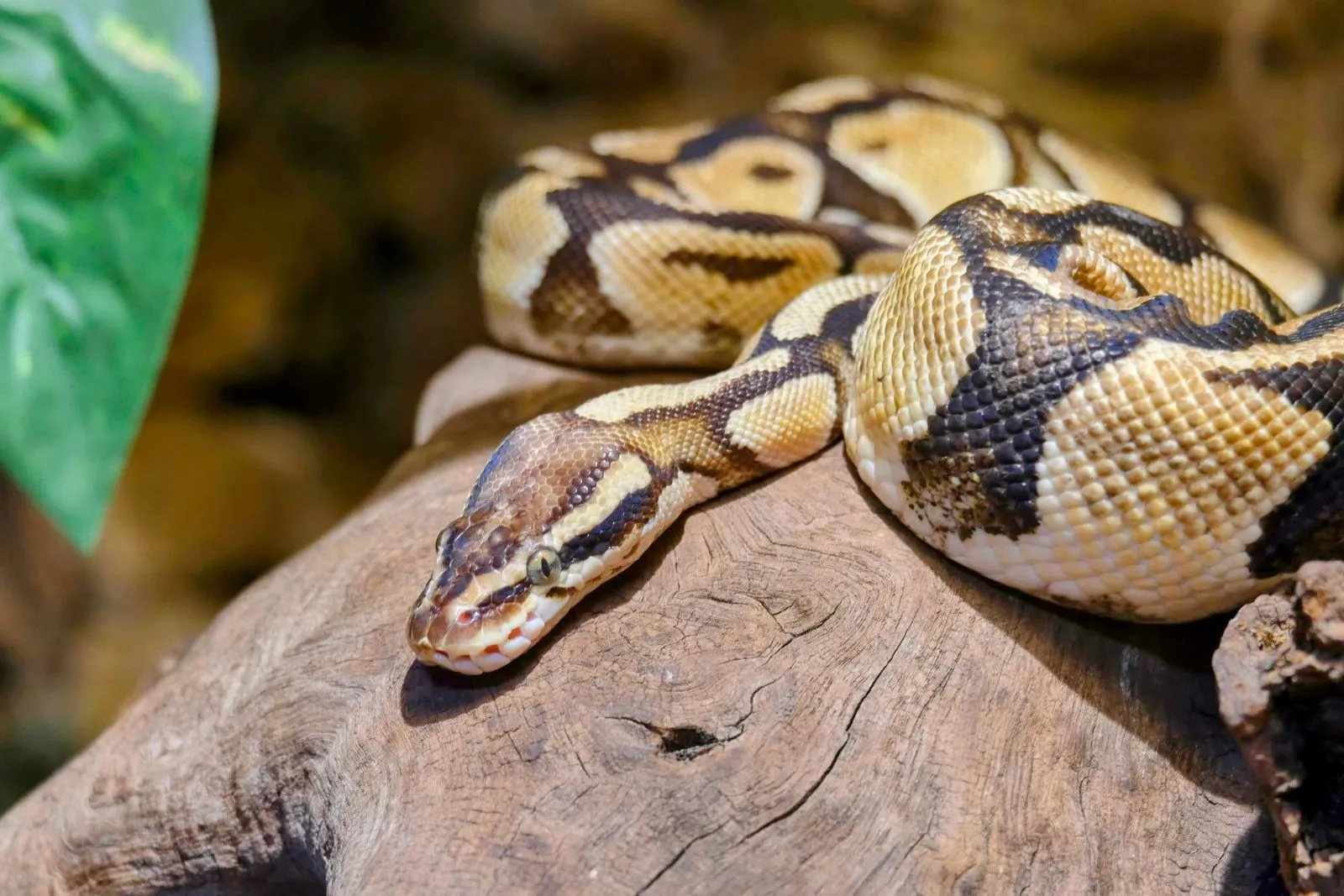
Ball python, spider morph. These animals show the so-called wobble: head tremor, tilted posture, disorientation. The severity varies, the trait does not. The same applies to Champagne, Powerball and Woma, and their combinations.
Ball python, homozygous Cinnamon. The homozygous forms show a raised rate of jaw and spinal malformations.
Leopard gecko, Enigma. Balance problems and poor aim when striking at prey. The link is considered established.
Leopard gecko, Lemon Frost. These animals develop iridophoromas — skin tumours — far more often than others.
What you can do. Ask for the morph — even if the animal looks ordinary, since traits can be carried invisibly. Watch the animal quietly for a few minutes before buying: a wobble often shows only when it lifts its head or moves. And do not buy out of pity: buying such an animal to rescue it funds the next pairing.
ReptiCare Markt has a field for this. Where a breeding form with a known risk is entered, the warning appears visibly in the listing.
3. Does the species actually fit?
The most honest question comes last. Some species are hard to satisfy in human care — because they grow very large, live very long, stay very shy, or need very particular conditions. A green iguana passes one and a half metres and needs an enclosure you can walk into. A tortoise outlives what many people expect and must hibernate every year.
Thinking it through beforehand spares the animal its second, third and fourth change of home.
The notes on harmful breeding traits, castration of male tortoises and the importance of rest periods follow feedback from Zürcher Tierschutz (September 2026). We worked it in wherever it could be substantiated.