
SpeciesReeves' turtle
Reeves' turtle
Mauremys reevesii
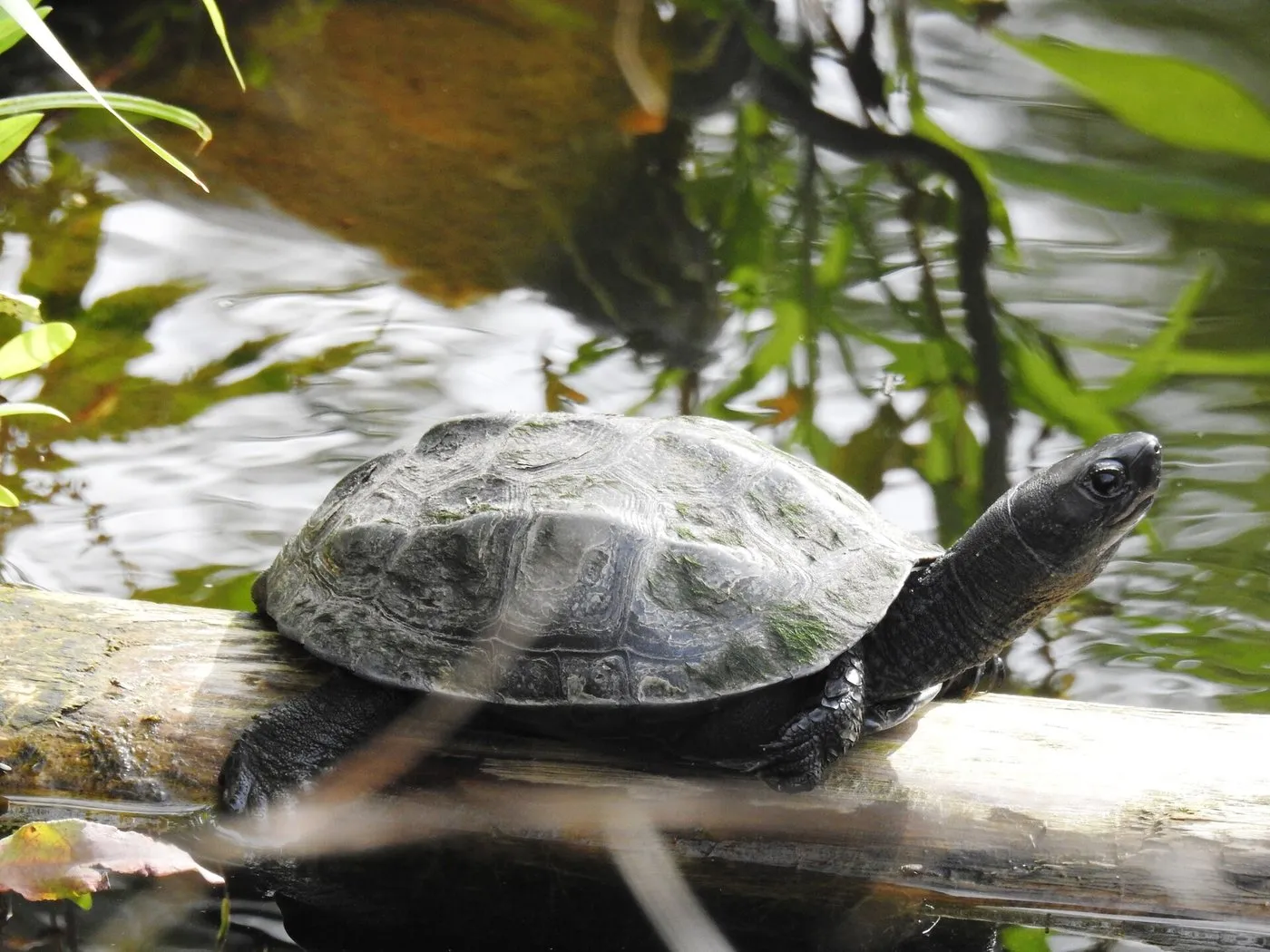
A calm, medium-sized water turtle, severely threatened in its home range. Captive-bred animals are widespread and far more acceptable than the banned red-eared slider.
- Group
- Tortoise or turtle
- Level
- Intermediate
- Origin
- East Asia
Where the species comes from
- World region
- East Asia
- Countries
- China, Taiwan and Korea; introduced in Japan
- Habitat
- Shallow ponds, rice paddies and slow rivers
The app does not yet hold an origin entry for this species. The distribution given here comes from the specialist literature.
The natural habitat is the yardstick for how you furnish an enclosure. Knowing where an animal comes from is knowing why it needs heat zones, hides and a particular humidity.
Husbandry at a glance
The same details appear in the animal’s profile inside the app.
- Enclosure
- Aquarium from 160 × 60 cm, better a garden pond in summer.
- Temperature
- Water 22–26 °C, basking spot 35 °C.
- Humidity
- Aquatic.
- Lighting
- UV-B above the land section, twelve hours.
- Substrate
- Sand or bare bottom.
- Furnishings
- A large dry land section, roots, water plants.
- Water
- Powerful filter, weekly partial change.
- Feeding
- Water plants, snails, fish, insects. Feed adults sparingly.
- Behaviour
- Diurnal, basks at length, not shy.
- Handling
- Only for checks.
- Cohabitation
- Alone or in a female group given plenty of space.
- Health
- Fungal infections and shell problems with poor water quality.
- Seasonal cycle
- Winter rest at 8–12 °C for two to three months.
- Safety
- No permit required. Never release.
Legal position in Switzerland
No permit foreseen
No permit required. The species does not belong to any of the groups listed in Art. 89 of the Swiss Animal Welfare Ordinance
No certificate of competence foreseen
No proof of competence required. It is only demanded for the animals named in Art. 89 of the Ordinance
Species protection applies
CITES Appendix III: Strongly declined in its home range. Ask for proof of origin when buying
Minimum enclosure dimensions
Annex 2, table 5 of the Animal Welfare Ordinance does not list this species. Among snakes the table names only giant snakes (pythons and boas), elapids, vipers and pit vipers, and a few venomous or dangerous colubrids; for the rest no figure appears there.
The general rule in Annex 2 (letter K) then applies: the enclosure must be large enough for everything the species needs (hides, basking spot, climbing branches) to be arranged sensibly. As a yardstick, the ordinance points to expert opinions on a scientific basis. There is therefore no binding figure. The guide values in the calculator come from the 1997 expert report. Binding information comes from the cantonal veterinary office.
What the enclosure must provide
A generous land section with heat and UV-B, clean filtered water. Releasing into the wild is forbidden.
Paperwork
Keep the purchase contract and proof of origin. Use the scientific name to check CITES and import status reliably.
These details are a guide, not legal advice. Binding information comes from the cantonal veterinary office; the text of the ordinance is what counts. More on the legal position

.jpg)