
SpeciesWestern hognose snake
Western hognose snake
Heterodon nasicus
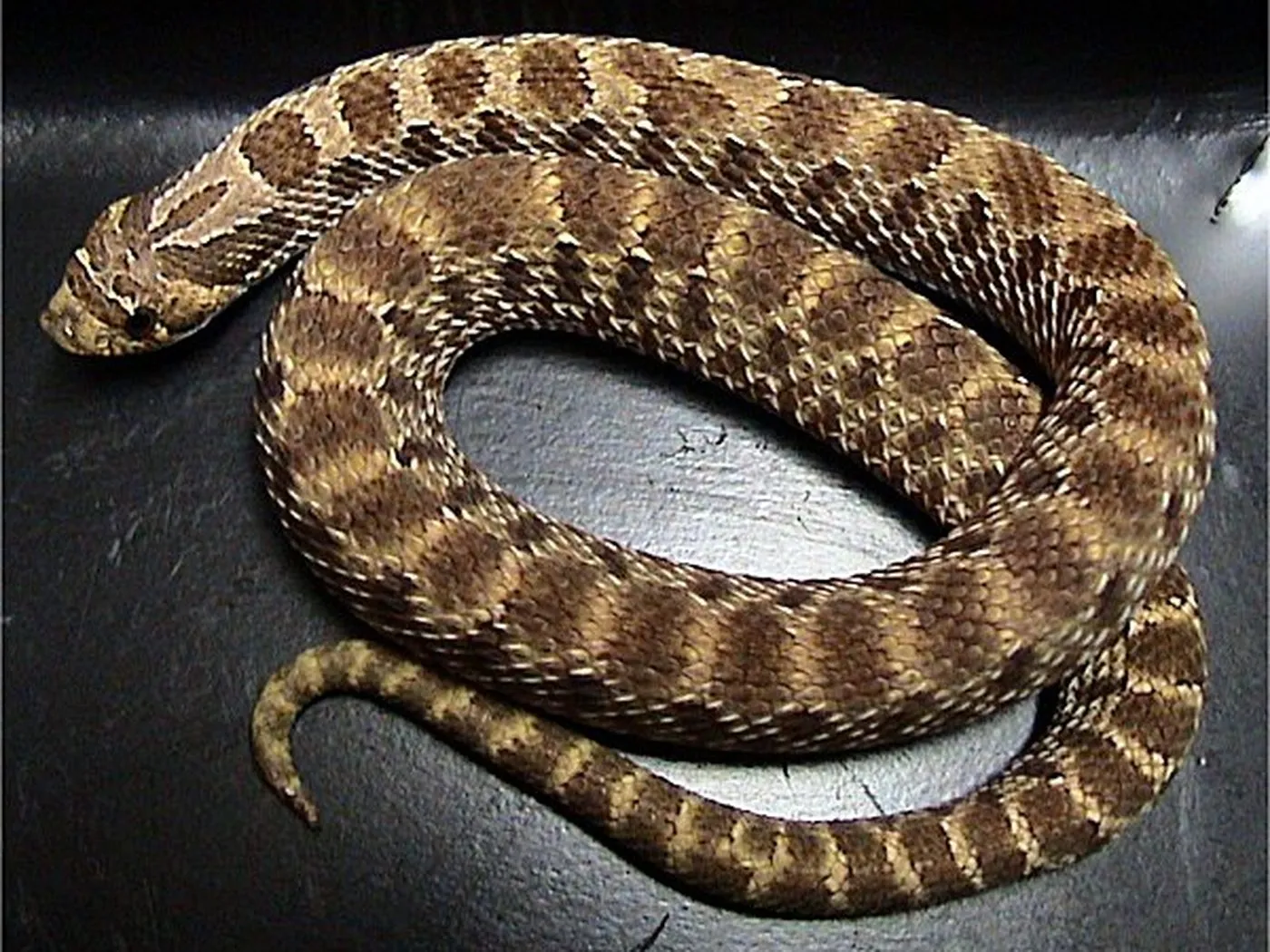
A small terrestrial snake that would rather burrow than climb and puts on an impressive performance when disturbed. Its enlarged rear teeth call for care when handling.
- Group
- Snake
- Level
- Intermediate
- Origin
- North America
Where the species comes from
- World region
- North America
- Countries
- Southern Canada and the central United States
- Habitat
- Dry prairie, grassland and loose, sandy soils
The natural habitat is the yardstick for how you furnish an enclosure. Knowing where an animal comes from is knowing why it needs heat zones, hides and a particular humidity.
Husbandry at a glance
The same details appear in the animal’s profile inside the app.
- Enclosure
- A ground-oriented, very escape-proof enclosure with a large floor area; for adult animals in practice often roughly 90 × 45–50 × 45–50 cm, more for larger animals.
- Temperature
- Basking spot around 32–35 °C, middle zone 24–29 °C, cool zone roughly 20–24 °C. Considerably cooler at night is fine, but not uncontrolled.
- Humidity
- Fairly dry to moderate, usually around 30–50 %, with a humid shedding box. Avoid permanently damp substrate.
- Lighting
- A bright day–night cycle; low-level UVB and visible daylight are advisable.
- Substrate
- A deep, loose, diggable layer in which stable tunnels can hold; for example a suitable soil and sand mix or a low-dust diggable reptile substrate.
- Furnishings
- Low snug hides, cork, leaf litter, small branches and open areas for digging. Secure heavy stones against undermining.
- Water
- A small, stable water bowl, checked daily.
- Feeding
- Appropriately sized thawed rodents; hatchlings can be difficult to start feeding. Do not force rapid growth through overfeeding.
- Behaviour
- Ground-dwelling and fond of digging. Hissing, flattening the neck and mock strikes are typical defensive responses.
- Handling
- Calmly and briefly. If the animal reacts strongly in defence, reduce stress and stop pressing it.
- Cohabitation
- Keep singly.
- Health
- Watch for weight, nose injuries from rubbing against the glass, shedding, breathing and digestion.
- Seasonal cycle
- Two to three months of winter rest at 10–14 °C match the rhythm of the North American prairie. Feeding pauses in winter are normal, especially in males. Stop feeding two to three weeks before cooling down and record the weight weekly.
- Safety
- Heterodon has enlarged rear teeth and saliva containing biologically active components. Avoid bites and seek medical assessment after one, especially with pronounced swelling or signs of an allergic reaction.
Legal position in Switzerland
No permit foreseen
No permit required. The species is rear-fanged and has a weak venom apparatus at the back of the upper jaw. Art. 89 let. h of the Ordinance covers snakes with a venom apparatus but exempts species designated harmless by the federal food-safety and veterinary office, the annex to its wild-animal ordinance lists «Heterodon spp.» at line 184. The exemption therefore covers the whole genus
No certificate of competence foreseen
No proof of competence required. It is only demanded for the animals named in Art. 89 of the Ordinance
No CITES listing
Not listed in the CITES appendices: Import and transfer require no species-protection papers. Keep the proof of purchase nonetheless
Minimum enclosure dimensions
Annex 2, table 5 of the Animal Welfare Ordinance does not list this species. Among snakes the table names only giant snakes (pythons and boas), elapids, vipers and pit vipers, and a few venomous or dangerous colubrids; for the rest no figure appears there.
The general rule in Annex 2 (letter K) then applies: the enclosure must be large enough for everything the species needs (hides, basking spot, climbing branches) to be arranged sensibly. As a yardstick, the ordinance points to expert opinions on a scientific basis. There is therefore no binding figure. The guide values in the calculator come from the 1997 expert report. Binding information comes from the cantonal veterinary office.
What the enclosure must provide
Provide an escape-proof enclosure, species-appropriate temperature zones, suitable humidity, places to retreat, water, substrate and, where applicable, a winter or dry rest period. Feeding live prey is permitted only under the narrow conditions of Art. 4 para. 3 TSchV.
Paperwork
Keep the purchase contract and proof of origin. Import and export are additionally subject to animal health and species protection legislation.
These details are a guide, not legal advice. Binding information comes from the cantonal veterinary office; the text of the ordinance is what counts. More on the legal position

