
SpeciesChilean rose tarantula
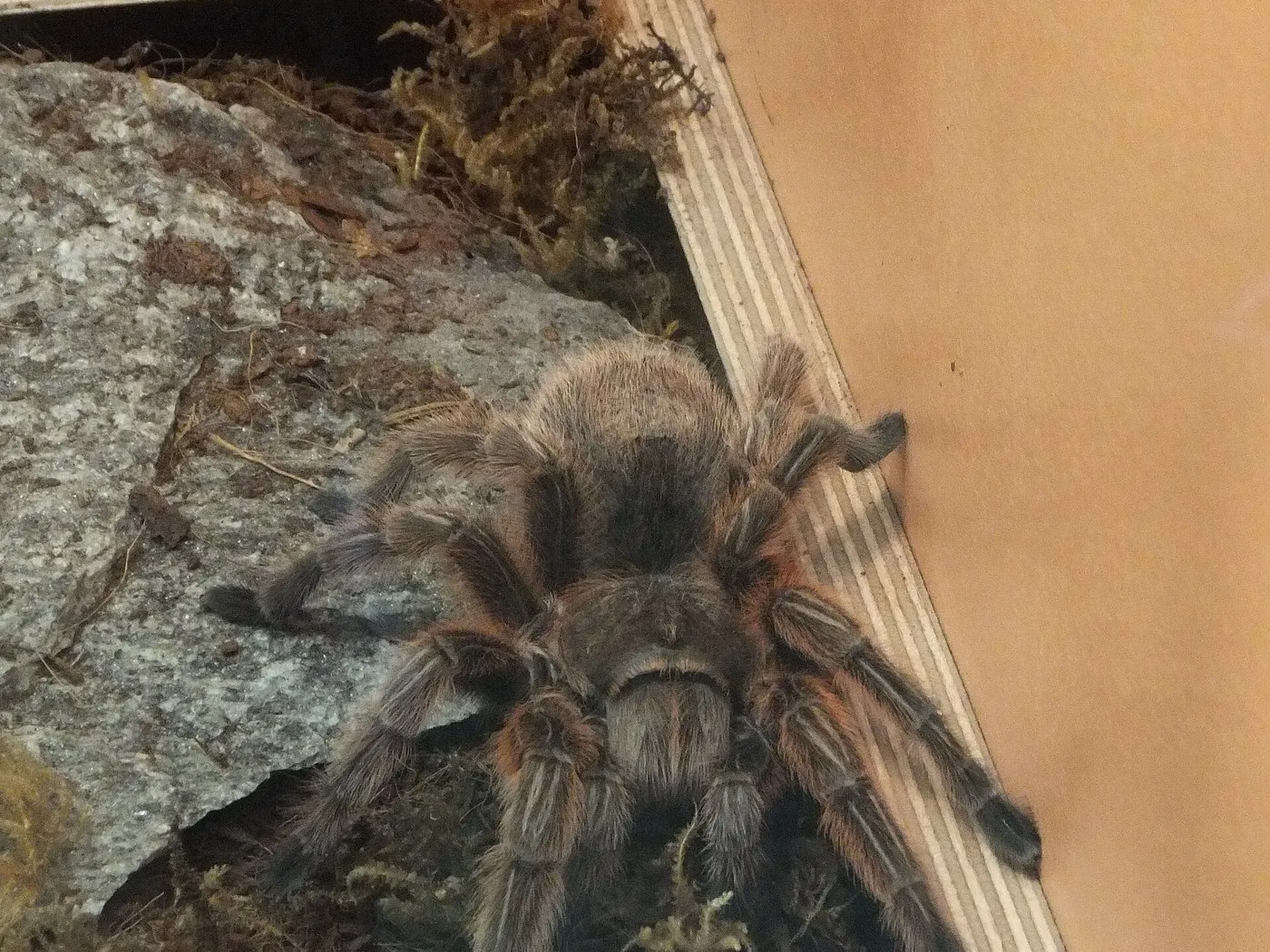
Chilean rose tarantula
Grammostola rosea
The calmest of the commonly kept tarantulas and therefore the classic first species. It gets by dry and without equipment, yet may fast for months with nothing wrong.
- Group
- Spider
- Level
- Beginner
- Origin
- South America
Where the species comes from
- World region
- South America
- Countries
- Chile, adjoining Argentina and Bolivia
- Habitat
- Dry semi-deserts and scrub at the edge of the Atacama
The app does not yet hold an origin entry for this species. The distribution given here comes from the specialist literature.
The natural habitat is the yardstick for how you furnish an enclosure. Knowing where an animal comes from is knowing why it needs heat zones, hides and a particular humidity.
Husbandry at a glance
The same details appear in the animal’s profile inside the app.
- Enclosure
- Ground dweller. 30 × 30 × 30 cm is enough for an adult; floor area matters, not height.
- Temperature
- 20–26 °C, room temperature is usually enough. Nights may be cooler.
- Humidity
- 50–60 %, so dry. Waterlogging is the most common cause of death in this species.
- Lighting
- No lighting needed; daylight in the room is enough. Avoid direct sun.
- Substrate
- 8–10 cm of dry substrate of coco humus or soil-sand mix, lightly pressed down.
- Furnishings
- A cork tube or piece of bark as a hide, one flat branch. Sparse is right here.
- Water
- Shallow water dish, always filled. Do not mist.
- Feeding
- Every one to two weeks a roach or cricket about half the body length. Feeding pauses of several months are normal in this species.
- Behaviour
- Calm and not quick to flee. When disturbed it flicks urticating hairs rather than biting.
- Handling
- Do not pick up. A fall even from a low height can rupture the abdomen and be fatal.
- Cohabitation
- Kept singly. Conspecifics are eaten.
- Health
- Moulting takes days in adults; during that time do not feed and do not disturb.
- Seasonal cycle
- A cooler, drier phase of six to ten weeks at 18–20 °C corresponds to winter in Chile. Long feeding pauses are normal in this species outside that period too and can last months — as long as the abdomen does not shrivel, there is no cause for concern.
- Safety
- Urticating hairs irritate skin and eyes: Wash your hands after working in the terrarium and keep them away from your face.
Legal position in Switzerland
No permit foreseen
No permit required. The species does not belong to any of the groups listed in Art. 89 of the Swiss Animal Welfare Ordinance
No certificate of competence foreseen
No proof of competence required. It is only demanded for the animals named in Art. 89 of the Ordinance
Species protection applies
CITES Appendix II since 5 March 2026. Switzerland initially entered a reservation and withdrew it with effect from 1 May 2026; since then the listing applies here too. Anyone keeping an animal needs documents on its origin and lawful acquisition and hands them over when passing it on (Art. 10 BGCITES). For animals bought before that, keep the proof of purchase
Minimum enclosure dimensions
The Animal Welfare Ordinance does not apply to these animals: under Art. 1 it governs the handling of vertebrates, cephalopods and reptant decapods. There are therefore no minimum dimensions. Housing, climate and places to retreat should still match the needs of the species. The cantonal veterinary office can say whether cantonal rules apply, for example to venomous animals.
What the enclosure must provide
Escape-proof closure, humidity suited to the species, a retreat and water. Spiders are kept singly; most species eat their own kind.
Paperwork
Keep the CITES papers and a receipt bearing the scientific name. For Appendix II they are needed for import and transfer. Cantonal rules may apply to venomous animals; check with the cantonal veterinary office before buying.
These details are a guide, not legal advice. Binding information comes from the cantonal veterinary office; the text of the ordinance is what counts. More on the legal position

